
samhexum
-
Posts
15,387 -
Joined
-
Last visited
Content Type
Forums
Donations
News
Events
Gallery
Everything posted by samhexum
-
Gerrit Cole threw first pitch strikes to 22 of 23 batters he faced. That's gotta be close to a record.

-
Her kid's uncle is the mayor of Kyiv. I take it you don't subscribe to Ukranian Weekly.
-
Prince Harry and Meghan Markle to Make Shocking Move Back to the U.K. with Kids Archie and Lilibet (Exclusive) THE DUKE AND DUCHESS OF SUSSEX ARE MOVING BACK TO BRITAIN WITH THEIR CHILDREN, WHO WILL BEGIN SCHOOL THERE THIS FALL, MARKING THE FAMILY’S BIGGEST DECISION SINCE STEPPING AWAY FROM ROYAL DUTIES SIX YEARS AGO https://apple.news/Ap4619zzFQpykNAVp05xDAw I can quote The Golden Girls for any situation in life.
-
Hulu's limited series "Good American Family" won't be limited, after all: The show has landed a Season 2 renewal at the streamer and will officially go the anthology route, Deadline reports. Season 2 will reportedly hail from the same creative team as the show's freshman run — series creator Katie Robbins and executive producer Ellen Pompeo — and will focus on the infamous case of Lorena Bobbitt. Pompeo, though, is not expected to star in the new episodes as she did in Season 1. Lorena Bobbitt was at the center of media attention in 1993, when she severed her husband John Bobbitt's penis while he was asleep. (It was later surgically reattached.) During her trial, Lorena alleged that John had abused and sexually assaulted her throughout their marriage; she was acquitted by reason of insanity, and John was separately acquitted of marital sexual assault. The Bobbitt case was previously the subject of the 2019 Prime Video docuseries "Lorena," which was executive-produced by Jordan Peele and featured interviews with both Lorena and John. On the scripted side, Lifetime adapted the case for its 2020 TV movie "I Was Lorena Bobbitt," starring Dani Montalvo and Luke Humphrey as Lorena and John, respectively.
-
Comedian Mo Gilligan joins Morning Joe to discuss his new Netflix documentary “Big Chicken: A Fast Food Conspiracy.” The project, in which Gilligan eats fried chicken three times a day for 28 days straight, explores the history of fried chicken and uncovers its impact on personal health and the environment. Gilligan says the documentary demonstrates a need to further examine what makes up a food. https://apple.news/AXNHAQd5fQjydPuEUW12ozw
-
They're supposed to be excellent. Mazel Tov!
-
National League MVP PCA started tonight's game versus the White Sox with a lead off home run, and he just ended it with a walk off home run in the bottom of the 10th. He also had a single and a double and his 31st stolen base earlier in the game. The second Homerun was his 30th of the year, giving him a second straight 30/30 season. And his defensive numbers are not just the best in the game this year they are among the best since Statcast started tracking those things. He is 24. The Mets need to go back in time and retroactively kill the person who made that trade. Although their outfield is looking pretty good for the rest of the decade, it would look a heck of a lot better with Soto DHing and Ewing playing left.
-
https://share.google/vY0AGa7aNOhV3Jhf Hayden Panettiere, Actress in ‘Heroes’ and ‘Nashville,’ Dies at 36 ""It is with profound sadness that we share the tragic passing of our beloved Hayden," her rep said in a statement. The details around her death are unknown. The Hollywood Reporter has reached out to her rep.
-

Hot New (Gay) Hockey Series on CRAVE: Heated Rivalry
samhexum replied to dutchal's topic in TV and Streaming services
According to Siri, Ottawa is two hours west of Montreal. Assuming that Shane's 'real estate fetish' is well-known, it wouldn't be conspicuous at all for him to buy a new place on the western edge of Montreal or maybe slightly outside the city as long as it is still convenient to the arena. Then, when Ilya signs with Ottawa, he can purchase a place on the eastern edge of the city or just outside it and then they'd be less than two hours apart and more able to stay over at other places when both teams are at home. I know Jacob Tierney somehow managed to craft the scripts for the second season, which is now in production, without me but in my head, this was all a part of episode seven from season one, which will be released as a bonus when the series is finally over.
-
Hot New (Gay) Hockey Series on CRAVE: Heated Rivalry
samhexum replied to dutchal's topic in TV and Streaming services
Well, he quit for awhile, but then Shane started dating Rose Landry...
-
an interesting video that popped up on my YouTube feed
samhexum replied to samhexum's topic in Comedy & Tragedy
-
-
On this day, 29 years ago, Kenny died. It wouldn't be the last time. The envelope-pushing, profanity-heavy animated series "South Park" premiered on Comedy Central on August 13, 1997.
-
Hasan also has a cute dog named Kaya.
-
James, Earl of Wessex, the youngest grandchild of the late Queen Elizabeth, has taken on an unexpected summer job at a beloved royal property. The 18-year-old son of Prince Edward and Sophie, the Duke and Duchess of Edinburgh, has been spotted working as a farmhand on the Sandringham estate in recent months. James has been seen driving tractors and “mucking in,” surprising some of the longtime workers on King Charles’ Norfolk estate. “Everyone is so used to only seeing James smartly turned out with his family at functions at Christmas and Easter, so I had to do a double take,” one employee recently told The Sun. “He might be the King’s nephew,” the worker added, “but he is more than happy to get his hands dirty and muck in.” King Charles is fond of the countryside, and it’s said that the monarch “couldn’t be prouder knowing the younger royals share his love.” James graduated from Radley College this summer; however, plans for his education and royal future have yet to be announced. He and his older sister, Lady Louise, 22, grew up largely out of the public eye, but James has followed his sister’s lead in joining the senior royals at more events since turning 18 last December. In June, he made his Royal Ascot debut, standing alongside his mother and other guests in the royal box. James, Earl of Wessex, Sophie, Duchess of Edinburgh, and guests attend day four of Royal Ascot 2026 on June 19, 2026Credit: Samir Hussein/Samir Hussein/WireImage Neither Louise nor James chose to publicly adopt a royal title or HRH (His/Her Royal Highness) styling upon turning 18, as was their birthright as Queen Elizabeth’s grandchildren. As they’ve reached adulthood and their parents have stepped into more senior royal roles following the accession of King Charles and Edward’s inheritance of his late father’s title, it’s believed that Louise and James may not be called upon for major royal duties. “I think Sophie — and Edward — have been careful to prepare their children for a life outside the working royal family,” royal biographer Sean Smith told GB News last year. Speaking to The Sunday Times in 2020, Sophie said, “We try to bring them up with the understanding they are very likely to have to work for a living. Hence, we made the decision not to use HRH titles. They have them and can decide to use them from 18, but I think it’s highly unlikely.” Just as James has followed in the King’s footsteps in tending to the royal estates, his older sister — who is expected to take a gap year after graduating from the University of St. Andrews last month —also inherited a storied royal pastime: carriage driving. The young royal frequently takes part in competitions, having learned her love of carriage driving from her late grandfather, Prince Philip, who also taught her mother. Following his death in 2021, Prince Philip left his ponies and carriage to Louise. She recently participated in her first competition of the season and was cheered on by her long-rumored boyfriend, Felix da Silva-Clamp.
-
Bills forced to issue statement after fury over new $2.1B stadium's design flaw fans slammed obstructed views at the brand new $2.1 billion Highmark Stadium set to debut this season, forcing the team to issue a statement after its first major public event Nobody wants to open a new $2.1 billion NFL stadium chapter by getting roasted like the Dragon Ball Z live-action movie, but the Buffalo Bills managed to do exactly that after Highmark Stadium failed its first test with fans before hosting a single NFL game. While the turnout set an attendance record and gave an eager Bills Mafia a first look at the new venue, some NFL fans lost their excitement after finding out that guard railings, glass barriers, stairways, and overhangs blocked parts of the field from their seats that took years to earn. The Bills were forced to address angry feedback after NFL fans discovered obstructed sightlines inside the new stadium during its first major public event, which drew over 50,000 hyped fans to the team's Return of the Blue & Red practice in Orchard Park. "Thank you to Bills Mafia for setting a new attendance record with more than 50,000 fans at the Return of the Blue & Red," the Bills said in a statement. "Saturday's practice was a great opportunity to test the new stadium. We are currently addressing internal and external feedback regarding the facility's operation following the first event," they continued. "We'll utilize the next six weeks to refine any details as we prepare for the home opener on Thursday, September 17." A source told ESPN that some seats with blocked views are not for sale for football games, but that did little to calm fans. Complaints quickly spread online and onto WGR SportsRadio 550, and fans questioned what they purchased and whether the Bills could realistically fix the problem before the regular season. One WGR caller even said PSL owners should get refunds or new seats. TicketData reports that the Bills' $365 get-in ticket price is the highest in the NFL, behind the Chicago Bears at $293. The Tennessee Titans have the cheapest at $34 for comparison. Another caller said that the team hurt trust within its fanbase by not delivering the experience fans expected or being transparent about the blocked-out views. The stadium's $2.1 billion price tag included $850 million in public money. Fans questioned how some seats could miss parts of the field after that kind of investment. Radio hosts said getting wet under the canopy is expected in an open-air stadium, but having to look around a railing to see the field is not something season-ticket holders signed up for. The Bills have six weeks to fix the issues before their first regular-season home game on September 17 against the Detroit Lions. Buffalo opens their 2026 campaign on the road against the Houston Texans. View 3 Images
-
From The Age “Examine” e-news letter: Scientists scanned 14 canine brains. They found another reason to love dogs by Angus Dalton August 11, 2026. We have a lot of scientifically dodgy beliefs when it comes to our dogs. The idea of needing to show a dog you’re the “alpha” is based on flawed science, they don’t actually see in black and white, and the concept of “dog years” – where one human year equates to seven years in a dog’s life – is a myth. But a new brain-scanning study has revealed new insights into something most dog lovers know to be true: our canine companions are excellent at reading and responding to human emotion. They can tell when we’re happy or sad, and are better at distinguishing between negative emotions such as fear, sadness and anger than we thought. Dogs can read us even better than chimpanzees, our closest evolutionary relatives, the authors claim. In particular, dog brains light up at happy human faces; even smiles from strangers activate the same region of a dog’s brain that responds to rewards such as toys and treats. Here’s how researchers pinpointed what’s going on inside the brains of our canine companions, and why science says we must smile at every dog we meet (just in case you weren’t doing that already). What a human smile does to a dog’s brain The study was undertaken in Hungary and Mexico. Researchers Dr Raúl Hernández-Pérez and Dr Laura Cuaya scouted parks for dogs who seemed calm and well-trained, and approached their owners to recruit them for the study. They gathered a group of 14 dogs made up of border collies (including the researchers’ own dogs, Odin and Kun-kun), , golden retrievers, a Labrador and a mutt. Odin and Kun-kun check out their own brain scans. Then came the hard part. Even humans find MRIs freaky. How would dogs fare in the clanky, clamorous cylinders, much less stay still enough for the test? Moving just three millimetres during a scan would render the data useless. Over 20 training sessions, the researchers painstakingly trained the dogs to lie still in the chamber, in a sphinx position with their jaws on a chin rest, rewarding them with treats and play for lying still. They gradually built from five seconds of stillness to the full three minutes, and introduced special earmuffs to protect the dogs’ hearing. Training complete, the dogs were scanned while researchers showed them images of human faces that were happy, sad, angry, fearful or neutral. Happy human faces triggered activity in the temporal cortex, an area of the brain which recognises faces and processes emotional cues, and the caudate nucleus, which handles rewards and motivation. “The activity in the caudate nucleus is particularly interesting,” Cuaya, from the University of Vienna, said on the release of the research. “It suggests that happy human faces may have emotional significance for dogs.” Fear and sadness, on the other hand, activated a different region of the brain called the right rostral supra sylvian gyrus (which processes visual and other sensory information) while anger lit up different sections called the right ectosylvian gyrus and the left splenial gyrus. Jargon aside, the results show dogs react uniquely to happiness and provide the first evidence dogs can tell the difference between some negative facial expressions (although they didn’t seem to distinguish well between sad and angry faces). Taken together with other studies, one of the main takeaways is that dogs interpret human happiness – even the smiles of strangers – as a reward. “We can reward our dogs with treats, but also reward them with happiness,” Cuaya told the BBC. “So we should smile at the dogs – even at random dogs in the street.” One key tip to give your dog a good life Animal-welfare scientist and dog expert Dr Mia Cobb, who wasn’t involved in the study published in iScience, said the sample size was small but offered valuable proof-of-concept findings that could be tested on other breeds. She said the dogs in the study responded stronger to fear and anger over sadness. “If we’re feeling scared or angry, it is really valuable for a dog to pay attention to that,” Cobb, from the University of Melbourne, says. If a person is scared, it could signal to a dog there’s danger nearby, while an angry person might pose a direct threat to a dog. “If we’re feeling sad, it’s less relevant for the dog, because it’s probably not going to threaten their safety.” While the study tested dogs’ reactions to still images, in reality they respond to a range of cues including our tone of voice, body language and, crucially, smell. “There’s been emerging evidence over the last couple of years that really shows dogs are very responsive to things like the odour of fear or odour of anxiety,” Cobb says. On that point, one of the best things we can do for our dogs’ welfare (besides smiling at them) is slowing down on walks and letting them sniff. A good whiff of a funky patch of grass is the dog equivalent of taking in a stunning mountain view, says Cobb. “They really live in a smell-based world, so letting them stop and sniff that tree trunk or wooden post that everyone else has peed on today is actually really important to them living a good life.” Dr Tiffani Howell, a senior research fellow at La Trobe University, said the results should prompt us to better understand our pets. “Dogs are great at reading us, but we’re not great at really reading them,” she says. Take the stereotypical, slinking “guilty” look you might get after a dog tears up a toilet roll or destroys a shoe. Research shows the dogs are not really feeling guilty – it’s more likely they just know their owner is angry and act submissive to avoid punishment. A few studies do, however, suggest our pups can experience jealousy when we pat or play with other dogs. In another just-published study on dog brains, researchers analysed ancient dog breeds (the Samoyed, the New Guinea singing dog, and the African and Korean village dog) and compared them to modern breeds (border collies, labradors and German shepherds). Thousands of years of artificial selection has re-wired the communication-related networks in the brains of modern dogs, boosting their capacity to process words and vocal cues from humans, the researchers reported. “We’ve lived very closely together for a really long time, and nowadays, dogs are reliant on humans for pretty much everything,” Howell, who wasn’t involved in either study, says. “It makes total sense that they would learn to read us very well.”
-
If Savannah Guthrie ever wondered whether her husband Michael Feldman watched her Today broadcast, she got her answer. On the Tuesday, Aug. 11 episode of the NBC morning news show, Guthrie revealed she got an unexpected message from Feldman after he heard her sneeze not once, but twice, live on the air. The interruption came moments into Today‘s 8 a.m. hour, while co-anchor Craig Melvin was delivering a decidedly more serious piece of news about President Donald Trump reportedly using a military jet to secretly leave Turkey amid threats. As Melvin detailed the report with the camera trained on him, two unmistakable sneezes from Guthrie could be heard off-screen. Several minutes later, Melvin decided the incident warranted an on-air explanation. “Just a moment to clarify something that happened here on the air a few moments ago,” he began. “Five minutes ago, I was sharing a story. You probably heard something that sounded like a sneeze. It was, in fact, not one but two sneezes from Savannah Guthrie.” “It was a doubler,” Guthrie, 54, joked. Melvin, 47, then claimed he had “managed to clean off” his shoulder following the sneezes, prompting an immediate protest from his co-anchor. “No, that is not true!” Guthrie insisted as Melvin assured viewers, “All is well. Savannah is okay.” That’s when Guthrie explained that Feldman had caught the moment from home. “I delicately sneezed over here, and then my husband texted me, ‘Bless you!’ ” she said. “He’s a good man,” Melvin replied, before offering Guthrie another “bless you” himself. Sheinelle Jones was particularly charmed by Feldman’s quick response. “I just love that he knows his wife’s sneeze!” she said. “I know, isn’t it?” Guthrie replied, boasting about her husband of 12 years (with whom she shares daughter Vale, 11, and son Charley, 9). “He knows my brand!” The lighthearted moment came just one day after Guthrie returned to Today following an extended absence from Studio 1A. Guthrie had been away from the morning show since July 21 while filming an entire season of her upcoming Wordle game show. Reuniting with Melvin on Monday, Aug. 10, she told viewers it was “nice to be back home” and described her time away as a “little game show summer.” Her return comes as Guthrie and her family continue to face an unimaginably difficult period in their personal lives. Aug. 1 marked six months since her mother, Nancy Guthrie, was abducted from her Tucson, Ariz., home. No suspects have been named in the case.
-
Hasan Piker's hotter, & more extreme in his views, than either.
-
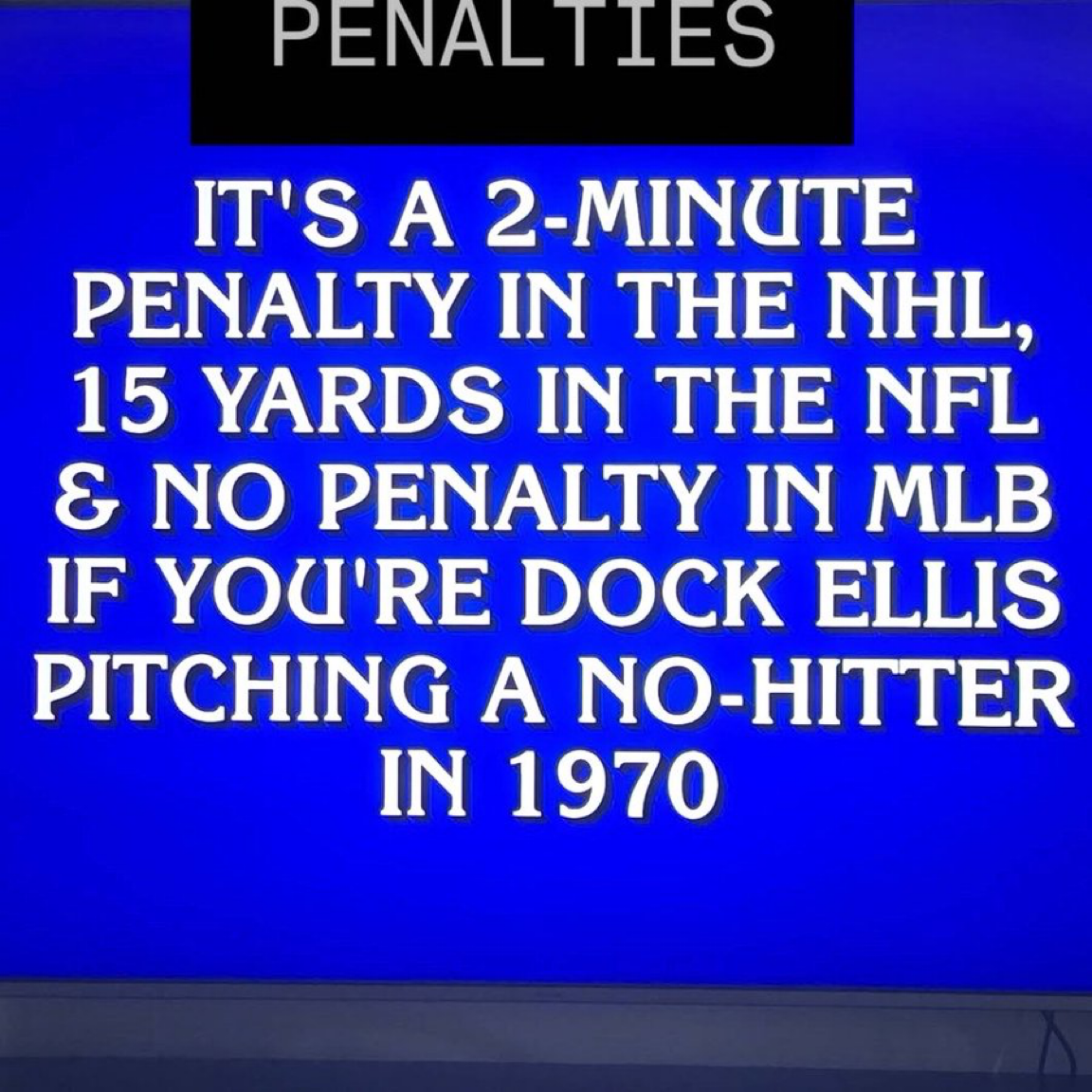
email from brother in law: Last nights final Jeopardy question. No one got it right: ME: Tripping ... so easy My Sister: The Jeopardy answer is easy for you. The nerds on Jeopardy have no idea about anything related to sports. That becomes a reality every time they have sports questions.
-